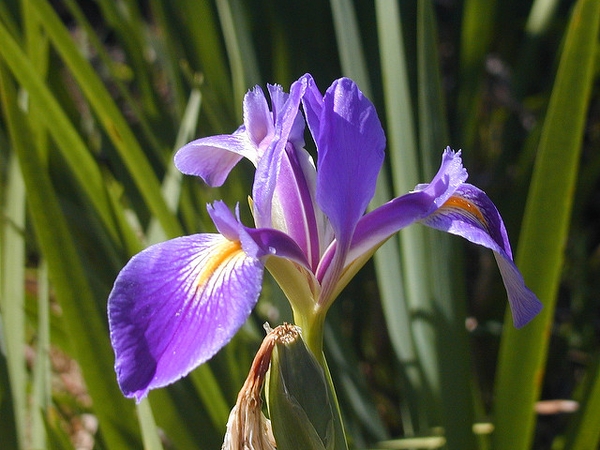
kwmedley.com – The Southern Blue Flag (Iris virginica), also known as the Virginia Iris or Southern Blue Iris, is a stunning aquatic perennial that thrives in wetland environments. This beautiful flower is known for its striking blue, purple, or lavender blooms, which add a bold splash of color to ponds, streams, and moist garden areas. Native to the southeastern United States, the Southern Blue Flag is an excellent choice for water gardens, bog gardens, or areas with consistently damp soil, where its elegant blooms can be admired for much of the spring and early summer.
Physical Characteristics of Southern Blue Flag
The Southern Blue Flag is a rhizomatous perennial that typically grows between 2 and 3 feet tall, making it a substantial presence in a garden. Its sword-like leaves, which are long, narrow, and erect, provide an attractive backdrop to the large, showy flowers. The leaves emerge in clumps at the base of the plant, and they tend to form dense foliage in wet soil conditions, contributing to the plant’s visual appeal.
The flowers of the Southern Blue Flag are one of its most captivating features. They bloom in late spring to early summer and are typically blue or purple, although some varieties may display shades of lavender or white. The flowers have three upright petals and three downward-curving sepals that form a distinctive, elegant shape. The rich colors of the flowers are often complemented by yellow markings on the lower petals, adding an extra layer of visual interest. Each flower typically lasts for a few days, but with multiple blooms on a single plant, the display can last for several weeks.
After the flowers fade, the plant produces seed pods that contain numerous small, dark seeds. While these seeds are not typically collected for propagation, Southern Blue Flag can also be propagated by dividing its rhizomes, which is the preferred method for gardeners.
Growing Conditions and Care
The Southern Blue Flag is an aquatic plant that thrives in moist, well-drained soil, ideally in locations that are consistently damp or partially submerged in water. It grows naturally along the edges of ponds, lakes, marshes, and streams, where its roots can remain in the water while its stems rise above the surface. In a garden setting, it is perfect for water gardens, bog gardens, or rain gardens where there is a reliable water source.
Southern Blue Flag is hardy in USDA zones 3 to 9, making it suitable for a variety of climates, particularly those with warm summers and mild winters. It prefers slightly acidic to neutral soil and benefits from rich, organic matter in the soil, which helps retain moisture and ensures the plant gets the nutrients it needs to thrive.
When planting Southern Blue Flag, it is important to ensure that the plant’s roots are submerged or placed in consistently moist soil. This plant is highly adaptable to a range of water depths, from shallow water to soil that remains constantly wet but not flooded. For gardens without a water feature, Southern Blue Flag can still be grown successfully in damp, boggy areas, provided the soil retains moisture.
Southern Blue Flag requires minimal maintenance once established. It should be watered regularly during dry periods, especially in areas with shallow water, as the plant thrives when consistently moist. Deadheading spent flowers can help tidy the plant, and the foliage can be cut back in the fall to prepare for the next growing season. In the winter months, it may benefit from a light layer of mulch to protect the roots, particularly in colder climates.
Ecological Role of Southern Blue Flag
Southern Blue Flag plays a significant role in supporting local wildlife, particularly in wetland ecosystems. The flowers are highly attractive to bees, butterflies, and other pollinators, which are drawn to the bright colors and nectar-rich blooms. Additionally, the plant’s leaves and stems provide shelter and habitat for small creatures, such as insects and amphibians, while the dense foliage can help prevent soil erosion along the banks of ponds or streams.
The Southern Blue Flag is also beneficial for improving water quality. As a wetland plant, it can help filter excess nutrients and pollutants from the water, making it an important component of water purification in natural and constructed wetland environments.
Varieties of Southern Blue Flag
Although the species Iris virginica is the most common form of Southern Blue Flag, there are several varieties and cultivars with subtle differences in flower color and growth habits. Some notable varieties include:
- Iris virginica var. virginica: The typical variety, which features large, deep blue to purple flowers with yellow markings on the lower petals.
- Iris virginica var. shrevei: A variety that tends to have lighter blue to lavender flowers and is found in the southern parts of the United States.
- Iris virginica ‘Alba’: A cultivar that produces white or pale lavender flowers, creating a softer, more subtle appearance compared to the traditional blue varieties.
These varieties offer slight differences in flower color and habitat preference, allowing gardeners to choose the best option based on their location and aesthetic preferences.
Uses in Landscaping
The Southern Blue Flag is an ideal plant for moist, waterlogged, or low-lying areas in the garden. Some common uses include:
- Water Gardens: Southern Blue Flag is perfect for water gardens, where its striking flowers can be planted along the edges of ponds or streams to create a natural, serene landscape.
- Bog Gardens: This plant is well-suited for bog gardens or rain gardens, where its preference for wet conditions can help it thrive while adding beauty and color to these specialized garden areas.
- Wildlife Gardens: The Southern Blue Flag is a valuable plant for wildlife gardens, as it provides nectar and habitat for pollinators and small animals, such as amphibians and insects.
- Erosion Control: Because of its ability to grow along the edges of water bodies, Southern Blue Flag can be used to stabilize the soil and prevent erosion, particularly in wetlands or on the banks of ponds, lakes, or streams.
With its attractive flowers, ease of care, and ecological benefits, Southern Blue Flag is an excellent choice for gardeners looking to create natural, water-rich landscapes or add beauty to moist garden areas.
Conclusion
The Southern Blue Flag is a vibrant and elegant perennial that offers striking color and texture to water gardens, bog gardens, and other moist landscape settings. Its large, blue or purple flowers and sword-like foliage create a graceful presence in any garden, while its ecological benefits, such as attracting pollinators and improving water quality, make it a valuable addition to wetland habitats. Whether planted in a pond, along a stream, or in a damp garden bed, the Southern Blue Flag brings beauty, biodiversity, and a sense of tranquility to the landscape.