
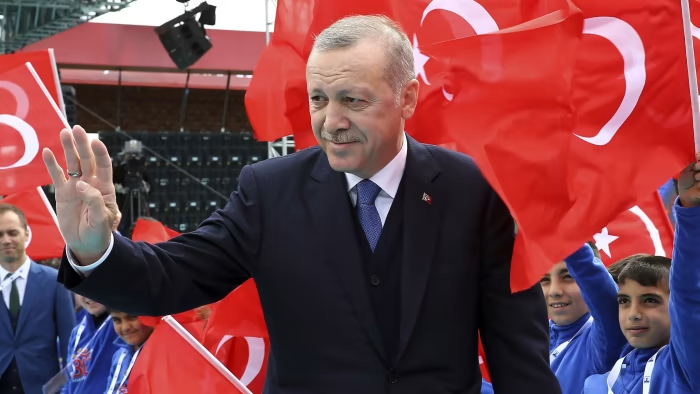
kwmedley.com – Recep Tayyip Erdoğan, a towering figure in contemporary Turkish politics, served as the Prime Minister of Turkey from 2003 to 2014 and has been the President of Turkey since 2014. His tenure as Prime Minister marked a pivotal period of transformation for Turkey, during which the country experienced significant economic growth, political shifts, and infrastructure developments. Erdoğan’s rise from a charismatic leader in local politics to a dominant figure on the national and international stage reflects his ability to consolidate power and reshape Turkey’s political landscape.
As Prime Minister, Erdoğan was instrumental in implementing economic reforms, modernizing the country’s infrastructure, and steering Turkey towards greater international influence. However, his tenure was also marked by increasing polarization, authoritarian trends, and criticism regarding the erosion of democratic principles. This article explores Erdoğan’s time as Prime Minister and his impact on modern Turkish politics, which continues to shape the country today.
Early Life and Political Rise
Recep Tayyip Erdoğan was born on February 26, 1954, in Istanbul, Turkey. Raised in a working-class neighborhood, he experienced modest beginnings, which shaped his political and leadership style. Erdoğan attended Imam Hatip schools, which catered to religious students, and later studied at the Mimar Sinan University Faculty of Arts, where he earned a degree in economics.
Erdoğan’s political career began in the 1970s when he became involved in the political and religious youth movements in Istanbul. His leadership qualities were soon recognized, and he joined the National Salvation Party, which had Islamist roots. By the 1990s, Erdoğan’s political influence had grown, and he was elected mayor of Istanbul in 1994, where he gained a reputation for pragmatic governance, overseeing major infrastructure projects and improvements in the city’s public services.
In 2001, Erdoğan co-founded the Justice and Development Party (AKP) alongside other figures from the Islamic political spectrum. The AKP quickly became a dominant force in Turkish politics, capturing significant support among conservative voters, secular liberals, and economic reformists. Erdoğan’s rise to the role of Prime Minister in 2003 marked the beginning of a new political era for Turkey.
Prime Minister of Turkey (2003–2014)
Recep Tayyip Erdoğan became Prime Minister of Turkey after his party, the AKP, won the 2002 parliamentary elections in a landslide. He served as Prime Minister from 2003 to 2014, a period that saw profound changes in the country’s economic, political, and social structures. Erdoğan’s leadership style emphasized pragmatism, economic modernization, and assertive foreign policy, all while maintaining a strong connection with Turkey’s conservative and religious segments.
Economic Transformation and Growth
Erdoğan’s tenure as Prime Minister was marked by significant economic reforms that transformed Turkey into one of the fastest-growing economies in the world. His government focused on stabilizing Turkey’s financial system, reducing inflation, and boosting foreign investment. Key economic policies included:
- Privatization of State-Owned Enterprises: Erdoğan’s government privatized several major state-owned companies and industries, which helped reduce Turkey’s reliance on government-controlled sectors and encouraged foreign investment.
- Infrastructure and Urban Development: Erdoğan oversaw major infrastructure projects, including new highways, bridges, and airports, as well as the development of Istanbul’s urban landscape. These projects not only modernized Turkey’s infrastructure but also boosted the economy by creating jobs and attracting investment.
- Economic Growth and Global Integration: Under Erdoğan’s leadership, Turkey’s GDP grew rapidly, and the country became an important player in global trade. Erdoğan’s government focused on deepening Turkey’s integration with international markets, while also focusing on the domestic economy.
- Reduction of Public Debt and Inflation: The government succeeded in curbing inflation and significantly reducing public debt, which had been major concerns for Turkey in the previous decade.
This period of economic growth allowed Erdoğan to build political support, particularly among middle-class and conservative voters who benefited from the prosperity that accompanied these reforms.
Consolidation of Political Power
During Erdoğan’s time as Prime Minister, he focused on consolidating his political power, which led to the strengthening of the executive branch and the marginalization of the military’s influence in politics. His government passed a series of legal and constitutional reforms that aimed to strengthen democratic institutions while reducing the political power of the military and judiciary.
One of the most significant steps Erdoğan took in consolidating his power was the reform of the Turkish military’s position in political life. Historically, the military had played a central role in Turkish politics, often intervening in civilian affairs. However, Erdoğan’s government worked to weaken the military’s grip on power, making reforms to curb its influence over the judiciary and political system. These efforts were seen as crucial in ensuring Turkey’s political stability and advancing its democratic process.
Foreign Policy and Regional Influence
Erdoğan’s foreign policy during his tenure as Prime Minister was centered on expanding Turkey’s influence in the Middle East and the broader international arena. He pursued a foreign policy strategy aimed at positioning Turkey as a regional leader and a bridge between Europe and the Middle East.
- European Union Accession Talks: Erdoğan’s government continued negotiations for Turkey’s EU accession, although these talks faced numerous hurdles, particularly over issues such as human rights, democracy, and freedom of speech. Despite these challenges, Erdoğan remained a proponent of Turkey’s European integration, viewing it as crucial to the country’s economic modernization and political stability.
- Middle Eastern Engagement: Erdoğan adopted a policy of “zero problems with neighbors,” aimed at improving relations with Turkey’s Middle Eastern neighbors. His government worked to strengthen diplomatic, economic, and cultural ties with countries such as Syria, Iraq, and Iran. However, these relations became strained in the following years, particularly with the outbreak of the Syrian Civil War.
- Assertive Diplomacy and Global Standing: Erdoğan sought to elevate Turkey’s global standing by taking a more assertive role in international diplomacy. He championed Turkey’s position in the United Nations, NATO, and other international bodies, and he worked to position Turkey as a key player in regional security and economic affairs.
Challenges and Growing Polarization
Erdoğan’s time as Prime Minister was also marked by increasing political polarization. His leadership faced opposition from secularists, the military, and other political groups, particularly regarding his conservative policies on social issues. Critics of Erdoğan’s government raised concerns about the growing influence of political Islam and the erosion of secularism, which had long been a cornerstone of Turkey’s identity.
In the latter years of his premiership, Erdoğan’s government faced increasing criticism for restricting media freedom, curbing civil liberties, and consolidating power within the executive branch. The government passed laws that allowed for the surveillance and prosecution of political dissidents and media outlets critical of the administration. These developments led to tensions with Western governments and human rights organizations, which expressed concerns over democratic backsliding in Turkey.
Transition to Presidency (2014–Present)
In 2014, Erdoğan transitioned from Prime Minister to President of Turkey, after winning the first-ever direct presidential election. His move to the presidency marked the beginning of a new phase in his political career, as he sought to transition Turkey from a parliamentary system to a more centralized presidential system, consolidating executive powers in the presidency.
While Erdoğan’s presidency has been marked by significant changes to Turkey’s political structure, his time as Prime Minister continues to define his legacy. As Prime Minister, he led Turkey through a period of growth, reform, and regional assertiveness, laying the groundwork for the transformation of the country into a more powerful and influential actor on the global stage.
Legacy and Impact
Recep Tayyip Erdoğan’s time as Prime Minister remains one of the most transformative periods in modern Turkish history. His economic policies fostered growth and modernization, while his political reforms reshaped Turkey’s democratic landscape. However, his leadership also sowed the seeds of political polarization and authoritarianism, which have become more apparent during his presidency.
As of 2024, Erdoğan’s legacy is deeply intertwined with Turkey’s political evolution, and his time as Prime Minister will continue to be remembered as a defining era for the country. Whether viewed as a reformist and pragmatic leader or as an authoritarian figure undermining democratic norms, Erdoğan remains a dominant force in Turkish politics, whose influence will continue to shape the nation for years to come.
