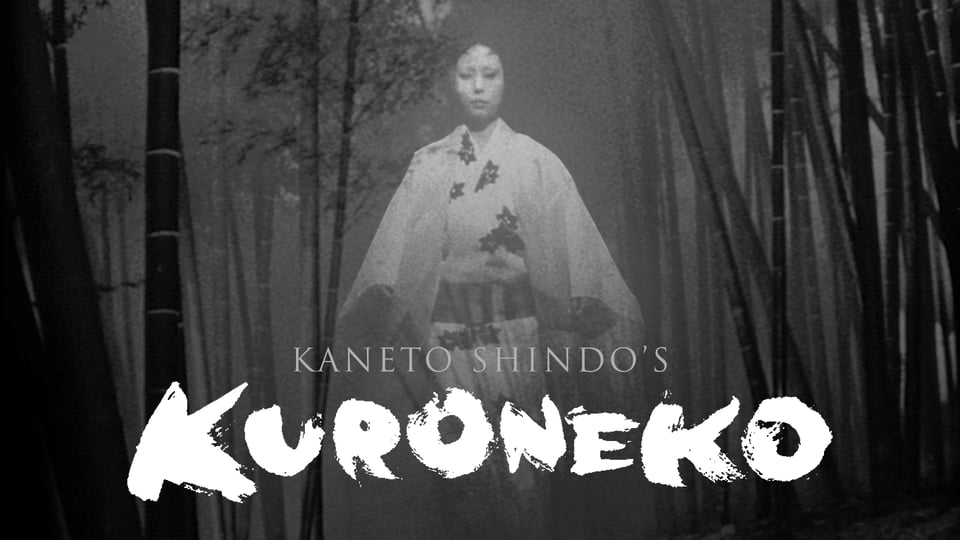
Kuroneko (1968) – A Tragic Tale of Revenge, Love, and Horror

kwmedley.com – Kuroneko (1968), directed by Kaneto Shindo, is a haunting and visually stunning film that seamlessly blends supernatural horror with themes of love, betrayal, and vengeance. Often regarded as one of the finest examples of Japanese horror, Kuroneko uses elements of folklore to tell a story that is as tragic as it is terrifying. With its beautiful cinematography, haunting atmosphere, and exploration of the darker aspects of human emotions, Kuroneko remains a timeless classic that continues to influence filmmakers in the horror genre.

Set in medieval Japan during a time of civil unrest, Kuroneko weaves a tale of two women who are brutally killed by a group of samurai, only to return as vengeful spirits. Their desire for revenge is transformed into a powerful and terrifying force, and the film explores the consequences of their wrath and the price of love and betrayal.

Plot Overview: The Revenge of the Ghostly Women

Kuroneko tells the story of a young woman named Yone and her mother-in-law, Shige, who live in a rural house on the outskirts of a war-torn village. The two women are raped and killed by a group of samurai who come through their home during the war. In the afterlife, their spirits return as vengeful ghosts, taking the form of powerful, mysterious beings who lure samurai to their deaths, killing them and drinking their blood. The women’s souls are consumed by their desire for revenge, and they continue to terrorize the samurai who cross their path.

The plot takes a significant turn when the son of Shige and Yone, Hachi, returns from the war, unaware that his mother and wife are now vengeful spirits. Upon returning home, Hachi encounters the two women, who appear to him as beautiful women in white kimonos, urging him to forget the past and live with them. However, as he gradually begins to suspect something is amiss, the tragic truth of their deaths and their transformation into vengeful ghosts is revealed.

The conflict intensifies when Hachi learns that the women are not the loving figures they once were but spirits consumed by rage and desire for vengeance. He is torn between his duty to the samurai code and his love for the two women who have returned in this supernatural form. The story builds toward a tragic and heartbreaking conclusion that highlights the price of revenge and the destructive nature of unresolved grief and anger.

Themes: Revenge, Love, and the Cycle of Violence

At its core, Kuroneko is a story about the destructive power of revenge and its ability to consume both the avenger and the victim. The two women’s deaths, though brutal, are followed by a powerful desire for vengeance that drives their spirits to kill without remorse. Their thirst for revenge is so strong that it transforms them into supernatural beings, no longer bound by human limitations.

The film explores the idea that vengeance is a cycle—one that is never truly satisfied and only leads to more suffering. The women’s desire to avenge their deaths leads them to kill countless samurai, but even after their revenge is fulfilled, they remain trapped in the cycle of violence, unable to find peace. The film questions whether vengeance can ever truly bring closure or if it simply perpetuates suffering and grief.

Love, too, plays a significant role in the film. The connection between Hachi and the two women—his mother and wife—forms the emotional backbone of the story. His deep love for them complicates his actions and decisions as he grapples with the truth of their supernatural transformation. The love that once united them is now poisoned by the vengeful spirits that have replaced the women he knew. His torn emotions create a sense of tragic inevitability, as the once-beautiful bond between them deteriorates into something horrific.

The theme of betrayal also runs through the film, as the samurai who kill the women betray not only the women but also the values they are meant to uphold. The samurai, who are supposed to be protectors and warriors of honor, are revealed to be rapists and murderers, committing unspeakable acts that set the tragic events of the film in motion. This betrayal of the women’s trust is central to the film’s exploration of the consequences of violence and dishonor.

Cinematic Style: Atmospheric and Haunting Imagery

One of the most striking features of Kuroneko is its visually arresting style. The film is shot in beautiful black-and-white, with stark contrasts and eerie lighting that create a sense of unease and mystery. The film’s cinematography, crafted by the legendary Kazuo Miyagawa, is vital in establishing its haunting atmosphere. The mist-filled landscapes, shadowy interiors, and sweeping shots of the moonlit countryside evoke a sense of isolation and otherworldliness that enhances the film’s supernatural themes.

The use of shadows and light is particularly effective in creating an unsettling tone. The two women, after their transformation into spirits, are often depicted as ghostly figures bathed in soft light, which contrasts with the darkness of the world around them. This play between light and shadow highlights the duality of their existence—both beautiful and deadly, innocent and vengeful.

The film’s settings also contribute significantly to its eerie atmosphere. The house, surrounded by a misty and desolate landscape, becomes a place of both refuge and danger. The characters are caught between two worlds—the living and the dead—reinforced by the haunting imagery of the marshes and the abandoned village. These locations, with their decaying structures and desolate surroundings, evoke feelings of isolation, grief, and despair.

The ethereal presence of the ghostly women is accentuated by their traditional attire and makeup. The contrast between their serene, ghost-like appearances and the violence they commit enhances the film’s chilling effect. The supernatural elements are integrated into the story in a way that feels organic, making the spirits of the women both terrifying and tragic at the same time.

The Symbolism of the Black Cat: A Link Between the Spiritual and Physical Worlds

The title Kuroneko translates to “Black Cat,” and while the literal presence of a black cat in the story is subtle, the film uses the symbolism of the cat to represent the connection between the human and supernatural realms. In Japanese folklore, cats are often seen as mystical creatures with the ability to bridge the world of the living and the dead. The black cat in the film can be seen as a symbol of the transformation of Yone and Shige from human women to vengeful spirits, as well as a representation of the unearthly nature of their revenge.

The cat also embodies the duality of their existence—beautiful yet deadly, nurturing yet destructive. Just as cats are often seen as both loving and enigmatic animals, the women in the film occupy a similar space, straddling the line between the living and the dead, between love and vengeance. The presence of the cat serves as a reminder of the eerie connection between the earthly and spiritual worlds, further enhancing the supernatural elements of the story.

Legacy and Influence: A Masterpiece of Japanese Horror

Kuroneko is considered one of the most influential horror films in Japanese cinema. Its blend of supernatural horror with social commentary on love, betrayal, and revenge set it apart from other films of the genre. The film’s ability to combine beauty and terror, tenderness and horror, has made it a classic that continues to inspire filmmakers today.

The influence of Kuroneko can be seen in many subsequent horror films, both within Japan and internationally. Its visual style and thematic complexity paved the way for future films that explore the intersection of the supernatural and the human condition. The film’s exploration of love and revenge as destructive forces is a theme that resonates in many modern horror and psychological thrillers.

Critically, Kuroneko has been praised for its emotional depth, its haunting atmosphere, and its ability to evoke both fear and empathy for the characters. It is a film that transcends the boundaries of traditional horror, offering a meditation on the cost of vengeance and the power of love. For fans of Japanese cinema, Kuroneko remains an essential work of art.

Conclusion: A Tragic and Haunting Masterpiece

Kuroneko (1968) is a haunting and beautifully crafted tale that explores the destructive power of vengeance, the complexity of love, and the tragic consequences of betrayal. Through its stunning visuals, atmospheric tension, and emotional depth, the film remains one of the most significant entries in the history of Japanese horror. Its exploration of supernatural themes and the human capacity for cruelty and redemption continues to resonate with audiences today, cementing Kuroneko as a timeless classic that stands as a testament to the power of storytelling and cinematic art.

13 Assassins (2010): A Gripping Samurai Epic of Honor

kwmedley.com – 13 Assassins (2010), directed by Takashi Miike, is a thrilling and visually striking samurai film that combines elements of classic Japanese cinema with modern action filmmaking. Set during the late Edo period of Japan, the film tells the story of a group of samurai who band together to assassinate a brutal and corrupt lord. Based on the 1963 film of the same name, 13 Assassins is a reimagining of the original story, and Miike’s version has been praised for its balance of emotional depth, complex characters, and intense action sequences.

Miike, known for his diverse and often provocative filmography, brings a unique style to 13 Assassins, imbuing the film with his trademark energy and intensity while remaining faithful to the spirit of samurai cinema. The film is a meditation on honor, loyalty, and sacrifice, set against a backdrop of political intrigue and social unrest. 13 Assassins stands as both a homage to the samurai genre and a powerful standalone epic, captivating audiences with its brutal action and compelling narrative.

Plot Overview

The plot of 13 Assassins revolves around a group of samurai who are tasked with assassinating Lord Naritsugu Matsudaira (played by Goro Inagaki), a sadistic and tyrannical nobleman whose reign of terror has caused suffering and fear throughout Japan. Naritsugu is a man of unrelenting cruelty, and his actions threaten the stability of the nation. The film begins with the shocking news of Naritsugu’s rise to power and his imminent appointment to a high-ranking political position, which would grant him even more authority and control.

A group of samurai, led by the honorable and stoic Shinzaemon Shimada (played by Koji Yakusho), is assembled to confront the impending threat. Shinzaemon is a former samurai who has lived in relative obscurity, but he is called upon by his superior, the shogunate, to take action against Naritsugu. To carry out the assassination, Shinzaemon recruits a team of 12 other samurai, all of whom share a sense of justice and duty, despite their personal histories and motivations.

The plot unfolds with the preparation for the assassination, as Shinzaemon and his men carefully plan their strategy. However, they know that the task ahead of them will be no easy feat. Naritsugu is surrounded by a powerful and loyal army of soldiers, and the assassins will have to face both overwhelming odds and the harsh realities of battle.

As the story progresses, the tension builds toward the final confrontation. In a stunning and brutal action sequence that lasts for much of the film’s final act, the 13 assassins face off against Naritsugu’s army in a battle to the death. The samurai must rely on their skills, ingenuity, and loyalty to overcome their enemies and complete their mission, even as the cost of their actions mounts.

Themes: Honor, Loyalty, and Sacrifice

The Code of Honor

At the heart of 13 Assassins is the samurai code of honor, known as bushido. This code emphasizes loyalty, duty, and self-discipline, values that are central to the motivations of the characters. The assassins, despite their differences, are united by their shared sense of honor and their commitment to carrying out a mission that will restore justice and protect the people from a tyrannical ruler.

Throughout the film, the characters’ actions are driven by their adherence to bushido, which often requires personal sacrifice and the willingness to face death for a noble cause. The film highlights the internal conflict faced by the samurai as they navigate the complexities of their duty. They are not driven by personal gain or revenge, but rather by a deep sense of responsibility to the greater good and the preservation of order in a troubled society.

In particular, the character of Shinzaemon embodies the ideals of bushido. He is a man of principle, willing to risk his life and the lives of his men in order to fulfill his duty. His actions are a testament to the unflinching loyalty and selflessness that are the hallmarks of the samurai code.

Loyalty and Brotherhood

Loyalty is another central theme in 13 Assassins, and the bond between the 13 samurai is one of the most powerful elements of the film. The samurai are not simply a group of hired mercenaries, but a brotherhood bound together by a common cause. Each assassin has his own personal reasons for joining the mission, but they are united by their shared commitment to their duty and their respect for each other.

As the film progresses, the characters are forced to confront the realities of their mission, including the inevitability of death. Despite the dangers, they remain resolute in their loyalty to their comrades and to their mission. The sacrifices made by the samurai serve to highlight the strength of their brotherhood and the importance of solidarity in the face of overwhelming adversity.

This theme of loyalty is further explored through the relationship between Shinzaemon and his nephew, Isaburo (played by Hiroki Matsukata). Isaburo is initially hesitant to join the mission, but his loyalty to his uncle and his desire to honor the samurai code ultimately drive him to take part in the mission. The personal connections between the characters add an emotional depth to the film, making the stakes of the battle all the more poignant.

Sacrifice and Death

The theme of sacrifice is perhaps the most prominent in 13 Assassins, as the characters are fully aware that their mission may cost them their lives. The samurai are prepared to lay down their lives for the greater good, and their willingness to make this ultimate sacrifice is what elevates the film from a simple action story to a powerful meditation on duty and selflessness.

The final battle sequence is a harrowing depiction of the consequences of the assassins’ mission. As the samurai face overwhelming odds and fight against a well-armed army, the film does not shy away from the brutal realities of war and combat. The characters are forced to confront their mortality, and the film powerfully captures the moment of their sacrifice.

This theme of death and sacrifice is also explored through the character of Naritsugu, the villain of the story. Naritsugu is portrayed as a man who is beyond redemption, a sadistic ruler whose cruelty has no bounds. His eventual demise is the culmination of the samurai’s struggle, and it serves as a grim reminder of the consequences of unchecked power and corruption.

Cinematic Style and Visuals

Takashi Miike’s direction in 13 Assassins is marked by its fluid combination of intense action sequences and character-driven drama. The film’s pacing is carefully constructed, balancing moments of quiet tension with explosive action. Miike uses a variety of visual techniques, including sweeping wide shots of the countryside and intimate close-ups, to create a sense of scale and emotional depth.

The final battle scene, which is one of the most memorable aspects of the film, is a masterclass in action filmmaking. The filmmakers employ long takes, intricate choreography, and a mix of practical effects and CGI to create a fight that feels both chaotic and meticulously crafted. The battle is brutal and unrelenting, with each moment feeling like a desperate struggle for survival. The film’s use of violence is not gratuitous but serves to underscore the sacrifices made by the samurai and the high cost of their mission.

The cinematography by Nobuyasu Kita captures the beauty of Japan’s landscapes while also highlighting the gritty and visceral nature of the samurai’s battle. The use of natural light, combined with the film’s realistic set designs, contributes to a sense of authenticity and immersion.

Reception and Legacy

13 Assassins was released to widespread critical acclaim, with many praising Miike’s ability to blend traditional samurai film tropes with modern action filmmaking. The film was lauded for its strong performances, especially by Koji Yakusho as the stoic leader Shinzaemon, and for its stunning action sequences. It was also noted for its thought-provoking themes of honor, loyalty, and sacrifice, which resonate beyond the confines of the samurai genre.

The film was a commercial success, both in Japan and internationally, and helped to introduce Miike’s work to a wider audience. 13 Assassins was widely regarded as one of the best samurai films of the 21st century, and it revived interest in the genre, attracting both long-time fans and newcomers to the world of samurai cinema.

Miike’s film also helped to revitalize the reputation of the samurai epic, which had seen a decline in popularity in recent decades. By blending traditional storytelling with modern filmmaking techniques, 13 Assassins became a touchstone for a new generation of filmmakers and fans alike.

Conclusion

13 Assassins (2010) is a riveting and powerful samurai epic that explores timeless themes of honor, loyalty, and sacrifice. Takashi Miike’s masterful direction, combined with strong performances and stunning action sequences, makes the film a standout entry in the samurai genre. The film’s meditation on the nature of duty and the cost of justice elevates it beyond a mere action film, creating a story that is both emotionally resonant and visually spectacular. 13 Assassins is a modern classic that reaffirms the enduring power of samurai cinema.