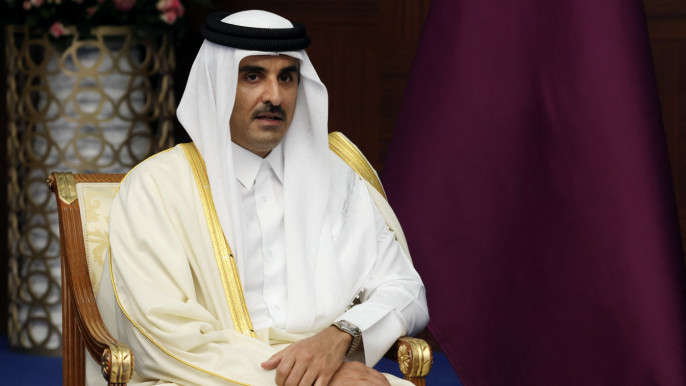
Sheikh Tamim bin Hamad Al Thani: The Visionary Emir of Qatar

kwmedley.com – Sheikh Tamim bin Hamad Al Thani, the Emir of Qatar, has emerged as one of the most influential and forward-thinking leaders in the Gulf region since ascending to the throne in 2013. As the head of state of one of the wealthiest nations in the world, Sheikh Tamim has been at the forefront of a dynamic transformation in Qatar, focusing on economic diversification, regional diplomacy, and international development. Under his leadership, Qatar has strengthened its position as a global player, particularly in the areas of finance, sports, culture, and politics. Sheikh Tamim’s vision for Qatar’s future continues to shape the nation’s trajectory in the 21st century.

Early Life and Education

Born on June 3, 1980, Sheikh Tamim is the fourth son of Sheikh Hamad bin Khalifa Al Thani, the former Emir of Qatar, and Sheikha Moza bint Nasser. He was raised in an environment that emphasized the importance of education, leadership, and a commitment to public service. Sheikh Tamim received his early education in Qatar, and later attended the prestigious Harrow School in London, a renowned British institution known for educating prominent figures.

Sheikh Tamim’s university education continued at the Royal Military Academy Sandhurst in the United Kingdom, where he graduated in 1998. This military training, combined with his academic background, laid the foundation for his future leadership role in Qatar. His upbringing and education equipped him with the skills and vision to navigate both domestic and international challenges, leading Qatar toward greater prosperity and influence.

Ascension to the Throne and Leadership Style

In June 2013, Sheikh Tamim succeeded his father, Sheikh Hamad bin Khalifa Al Thani, as Emir of Qatar. His father’s abdication was a peaceful and unprecedented transfer of power, and Sheikh Tamim’s accession marked the beginning of a new era for the country. Sheikh Hamad had overseen a period of remarkable development in Qatar, and his son inherited a nation that was poised to further enhance its global stature.

Sheikh Tamim’s leadership style is characterized by pragmatism, vision, and diplomacy. While his father had focused on using Qatar’s vast natural gas wealth to elevate the country’s international influence, Sheikh Tamim has pursued policies that prioritize long-term sustainability and diversification. His leadership has focused on balancing economic development with social progress, positioning Qatar as a modern and progressive nation.

Economic Diversification and Vision 2030

One of Sheikh Tamim’s primary goals as Emir has been to diversify Qatar’s economy, reducing its dependence on hydrocarbons, which have long been the backbone of the country’s wealth. His vision for the future of Qatar is encapsulated in the Qatar National Vision 2030, a roadmap for economic, social, and environmental development. Under this vision, Sheikh Tamim has committed to transforming Qatar into a knowledge-based economy with a focus on education, technology, healthcare, and sustainable development.

Key to this vision has been the development of the country’s infrastructure, with extensive investments in transport, real estate, and energy. Qatar has pursued large-scale infrastructure projects, including the expansion of the Hamad International Airport, the development of new sports facilities in preparation for the 2022 FIFA World Cup, and investments in the country’s ports and rail networks. These developments are part of Qatar’s broader effort to position itself as a key player in global trade and commerce.

In addition to infrastructure, Sheikh Tamim has supported the development of Qatar’s financial sector, aiming to turn Doha into a regional and global financial hub. The Qatar Financial Centre (QFC) and other financial institutions have bolstered the country’s economy, attracting foreign investment and creating a more diversified and resilient economy.

Diplomacy and Global Influence

As Emir of Qatar, Sheikh Tamim has also placed a strong emphasis on foreign policy and diplomacy, seeking to position Qatar as an active and influential player on the world stage. Under his leadership, Qatar has maintained strong relationships with key global powers, including the United States, the United Kingdom, France, and regional allies such as Saudi Arabia and Turkey. Sheikh Tamim has been instrumental in preserving Qatar’s role as a mediator in regional and international conflicts, promoting dialogue and negotiation as key tools in diplomacy.

One of Sheikh Tamim’s key achievements has been his role in leading Qatar’s efforts in promoting peace and humanitarian aid. Qatar has played a significant role in providing assistance to crisis regions, including Syria, Yemen, and Palestine, often working through its humanitarian organizations like Qatar Charity and the Qatar Red Crescent. Sheikh Tamim has also pushed for a peaceful resolution to regional tensions, including conflicts in the Gulf and the wider Middle East.

Sports Diplomacy and the 2022 FIFA World Cup

Sheikh Tamim’s leadership has seen Qatar become a central hub for international sports, with the Emir playing a key role in securing the 2022 FIFA World Cup for the country. Qatar’s successful bid to host the prestigious tournament marked a significant milestone in the country’s rise to global prominence, and it has been a catalyst for large-scale infrastructure and development projects across the nation.

The 2022 World Cup is set to be a transformative event for Qatar, not only in terms of boosting the economy but also in raising the country’s profile on the world stage. Sheikh Tamim has positioned the World Cup as part of a broader strategy to use sports as a tool for diplomacy and international engagement. Qatar has also invested heavily in sports organizations and events, such as the Qatar Grand Prix, the Qatar Open tennis tournament, and the Doha Diamond League athletics event.

Through sports diplomacy, Sheikh Tamim has sought to strengthen Qatar’s soft power, creating a platform for cultural exchange and international collaboration. The World Cup, along with other sporting events, is expected to leave a lasting legacy for Qatar, contributing to the country’s ongoing efforts to modernize and diversify its economy.

Social Reforms and Empowerment

While Sheikh Tamim has been recognized for his economic and diplomatic achievements, he has also made significant strides in advancing social reforms. His leadership has brought about changes in areas such as women’s rights, education, and healthcare. Under his rule, Qatar has introduced policies aimed at improving gender equality, with increased opportunities for women in business, politics, and education.

Qatar’s education system has also undergone significant reforms, with a focus on higher education and research. The establishment of Education City, which hosts branches of leading international universities, has made Qatar a center for academic excellence in the region. Sheikh Tamim has also prioritized the health and well-being of his citizens, with investments in healthcare infrastructure and the development of world-class medical facilities.

Conclusion

Sheikh Tamim bin Hamad Al Thani’s leadership has been defined by a blend of traditional values and modern vision, with a focus on economic diversification, international diplomacy, and social progress. His efforts to transform Qatar into a global powerhouse in finance, sports, and culture have reshaped the country’s role on the world stage. As Emir of Qatar, Sheikh Tamim has been a driving force behind the realization of Qatar National Vision 2030, and his leadership continues to guide Qatar toward a future of continued prosperity and influence.

Through his diplomatic efforts, sporting achievements, and commitment to social reform, Sheikh Tamim has solidified his place as one of the leading figures in the Gulf and the wider Middle East. His legacy will undoubtedly shape Qatar’s future, ensuring its continued growth and development as a key player in global affairs.

Sultan Qaboos bin Said Al Said: The Visionary Leader

kwmedley.com – Sultan Qaboos bin Said Al Said, the former Sultan of Oman, is widely regarded as one of the most transformative and respected leaders in the Middle East. His reign, which spanned nearly 50 years from 1970 until his passing in January 2020, was marked by a series of far-reaching reforms that reshaped Oman into a modern, peaceful, and prosperous nation. Sultan Qaboos is remembered for his remarkable leadership, dedication to peace, and ability to balance modernization with the preservation of Oman’s cultural heritage.

Early Life and Ascension to the Throne

Sultan Qaboos was born on November 18, 1940, in Salalah, Oman, to Sultan Said bin Taimur, the ruler of Oman at the time. He was the only son of his father, who ruled Oman with an iron fist, maintaining a policy of isolation from the rest of the world. Sultan Qaboos was educated abroad, attending schools in India and the UK, where he studied at the prestigious Sandhurst Military Academy. His education abroad exposed him to Western ideas and values, which would later influence his approach to governance.

In 1970, at the age of 29, Sultan Qaboos ascended to the throne after deposing his father in a palace coup. His rise to power marked the beginning of a new era for Oman, as he sought to modernize the country and open it up to the outside world. Sultan Qaboos was determined to lead Oman on a path of progress, while ensuring that it maintained its unique cultural identity and traditions.

Modernizing Oman

When Sultan Qaboos assumed the throne, Oman was a country that was largely isolated, with little infrastructure or development. The country was economically and politically underdeveloped, and the majority of the population lived in rural areas with limited access to education, healthcare, or modern amenities. Sultan Qaboos set out to change this by implementing a series of bold reforms that would modernize Oman in every aspect of life.

One of Sultan Qaboos’s first major initiatives was the establishment of a comprehensive education system, which aimed to provide education to all Omanis, including girls. He prioritized the construction of schools, universities, and vocational training centers, ensuring that the next generation of Omanis would be well-equipped to contribute to the nation’s development. As a result, Oman’s literacy rates skyrocketed during his reign, and education became a cornerstone of the country’s progress.

Sultan Qaboos also focused on improving healthcare, building hospitals and clinics throughout the country, and ensuring that Omanis had access to modern medical services. This led to significant improvements in life expectancy and a reduction in infant mortality. Additionally, he invested in infrastructure development, including the construction of roads, airports, and ports, to connect the country and facilitate trade and commerce.

Political and Economic Reforms

Under Sultan Qaboos’s leadership, Oman also saw significant political reforms, although he maintained a system of absolute monarchy. He established the country’s first legislative council in 1991, which provided a platform for citizens to participate in the political process. While Oman’s political system remained largely centralized under the Sultan, he ensured that a degree of political dialogue and consultation took place through these councils.

Economically, Sultan Qaboos shifted Oman’s reliance away from a dependence on agriculture and fishing to a more diversified economy that included oil production, industry, and tourism. The Sultan personally oversaw the development of the country’s oil resources, which helped to fund many of the nation’s modernization efforts. However, he was also aware of the need to diversify Oman’s economy and reduce its dependence on oil revenues. This foresight led to investments in other sectors, including tourism, manufacturing, and renewable energy.

Sultan Qaboos also implemented policies that promoted the welfare of Omani citizens, focusing on reducing poverty and improving the standard of living. His efforts to develop a balanced economy and equitable distribution of resources were key factors in Oman’s economic success during his reign.

A Foreign Policy of Neutrality and Peace

Sultan Qaboos’s foreign policy was marked by a strong commitment to neutrality, diplomacy, and peace. Unlike many other leaders in the region, Sultan Qaboos was able to maintain Oman’s independence and avoid entanglement in regional conflicts. Oman’s foreign policy was based on principles of non-intervention, dialogue, and mutual respect, allowing the country to play a unique role as a mediator in regional and international disputes.

Sultan Qaboos’s neutral stance enabled Oman to act as a bridge between conflicting parties. The Sultan often played a behind-the-scenes role in facilitating dialogue and peace talks, particularly during times of regional tension. Oman’s diplomatic efforts, under Sultan Qaboos’s leadership, were instrumental in resolving conflicts and promoting stability in the Gulf region.

One of the most notable examples of Oman’s diplomatic success under Sultan Qaboos was the country’s involvement in the negotiations that led to the Iran nuclear deal. Oman’s relationship with Iran was crucial in facilitating communication between the U.S. and Iran, and the Sultan’s role in these negotiations demonstrated his ability to leverage Oman’s neutral position for the greater good.

Cultural Preservation and National Identity

Despite his focus on modernization and development, Sultan Qaboos was deeply committed to preserving Oman’s cultural heritage and national identity. He encouraged Omanis to take pride in their history, traditions, and values, while also embracing the benefits of modernization and progress. Sultan Qaboos’s vision was one of a balanced society that combined the best of both worlds — the traditions of the past and the opportunities of the future.

Oman’s rich cultural heritage, including its music, art, and architecture, flourished under Sultan Qaboos’s reign. He personally supported cultural institutions, including the establishment of museums and the promotion of traditional crafts. Additionally, Sultan Qaboos emphasized the importance of environmental conservation and the protection of Oman’s natural landscapes, including its mountains, deserts, and coastlines.

Legacy and Impact

Sultan Qaboos bin Said Al Said passed away on January 10, 2020, after a prolonged battle with cancer. His death marked the end of an era for Oman, but his legacy continues to live on in the country’s development and the values he instilled in his people. Sultan Qaboos’s vision transformed Oman from a largely underdeveloped country into a modern, stable, and prosperous nation with a high standard of living.

Sultan Qaboos’s leadership was defined by his commitment to peace, development, and the well-being of Oman’s people. He was not only a ruler but a unifying figure who managed to navigate Oman through a complex and often volatile regional landscape. His ability to balance tradition with progress, his dedication to diplomacy, and his investment in the welfare of his people left an indelible mark on Oman and the world.

Sultan Qaboos will always be remembered as a visionary leader who led Oman into the modern age while preserving the country’s unique cultural identity and commitment to peace.

Conclusion

Sultan Qaboos bin Said Al Said’s reign was one of transformation, peace, and progress. His leadership shaped Oman into a modern, thriving nation while maintaining its traditions and values. Through his efforts in education, healthcare, infrastructure, and diplomacy, Sultan Qaboos laid the foundations for a prosperous future for Oman and earned the respect and admiration of leaders and citizens around the world. His passing marked the end of a remarkable era, but his legacy continues to inspire future generations of Omanis.